
Article · 3 min read
Why Snoring May Be More Than Just Annoying
A sleep doctor explains when snoring is harmless and when it may be a warning sign of a serious health problem.
General information, not medical advice. Read our disclaimer.
When Snoring Is Dangerous
- About 45% of adults snore occasionally, but loud habitual snoring may signal a serious problem.
- More than 50% of people who snore loudly have obstructive sleep apnea.
- Dangerous snoring includes pauses, gasping, and choking sounds during sleep.
- Snoring associated with sleep apnea increases heart disease risk 2-4 times.
- A sleep study is the only way to tell if your snoring is harmless or dangerous.
For many people, snoring is just a nightly noise that bothers a bed partner. But for some, it is the most clear sign of a serious sleep problem called obstructive sleep apnea (OSA). Knowing the difference between harmless and dangerous snoring could protect your health. It could even save your life.
How common is snoring?
Snoring is very common. Nearly half of all adults snore at least now and then. As a sleep doctor, I share one key message with patients: not all snoring is the same.
Light snoring now and then can be harmless. But a doctor should check loud snoring that happens most nights. This is even more true if you have other symptoms.
What causes snoring?
Snoring happens when air flows past relaxed tissue in your throat. This makes the tissue shake. Several things add to snoring:
- Relaxed throat muscles — Alcohol, sleeping pills and other sedatives, and deep sleep relax these muscles even more.
- Extra tissue — Weight gain can add tissue around the throat.
- Stuffy nose — Allergies, colds or the shape of your nose can narrow the nose passages.
- Sleep position — When you sleep on your back, gravity pulls tissue into the airway.
- Body shape — Some people are born with a narrower airway, large tonsils or a long soft palate (the soft back part of the roof of the mouth).
When does snoring become dangerous?
Snoring goes from annoying to dangerous when it comes with:
- Breathing pauses — The main sign of obstructive sleep apnea.
- Low oxygen — The oxygen in your blood drops during sleep.
- Broken-up sleep — Many tiny wake-ups that keep you from getting restful sleep.
- Strain on the heart — The heart works harder when oxygen levels go up and down.
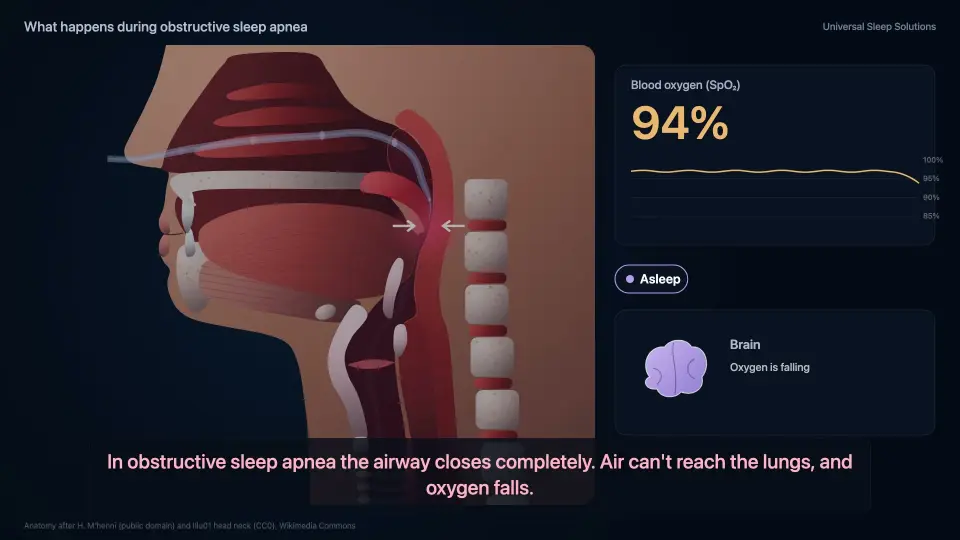
Not everyone who snores has sleep apnea. But nearly everyone with sleep apnea snores. The key difference is that in sleep apnea, your breathing actually stops. These pauses sometimes last 10 seconds or longer. They lower the oxygen going to your brain and body.
These breathing pauses make your brain wake you for a moment to open the airway. Most people do not remember these wake-ups. But in severe cases, they can happen 30, 50 or even more than 100 times an hour.
What are the risks of untreated sleep apnea?
- High blood pressure — Including high blood pressure that does not get better with medicine (resistant hypertension)
- Heart problems — Heart disease, heart attack and uneven heartbeat
- Stroke — A higher risk of stroke
- Type 2 diabetes — A higher risk of diabetes
- Car crashes — From driving while drowsy
- Mood and memory — Depression and loss of thinking skills
- Relationships — Strain when your partner's sleep is disturbed
When should you see a sleep doctor?
See a sleep doctor if you snore and also have:
- Gasping — Gasping or choking sounds during sleep
- Pauses — Pauses in breathing that your partner sees
- Bad mornings — Waking up tired or with headaches
- Daytime sleepiness — Feeling very sleepy or worn out in the day
- Focus and mood — Trouble focusing, or mood changes
- Blood pressure — High blood pressure that is hard to control
Your sleep doctor will ask many questions about your health and sleep. They will look at your airway. They may suggest a sleep study, which shows if your snoring is linked to sleep apnea. A sleep study measures your breathing, oxygen levels, brain activity and heart rate during sleep.
How is it treated?
Treatments that work are available, from CPAP to Inspire:
- Lifestyle changes — Losing weight, sleeping on your side and not drinking alcohol before bed.
- CPAP therapy — A machine that keeps your airway open with a steady stream of air.
- Oral appliances — A mouth guard that moves your jaw forward to keep your airway open.
- Inspire therapy — A device placed in the body for people who cannot use CPAP.
- Surgery — Procedures to remove or shrink tissue that blocks the airway.
SNORING · HOW IT HAPPENS
When snoring becomes sleep apnea
Throat tissue relaxes
Air flows past relaxed tissue in your throat and shakes it.
Breathing stops
In sleep apnea, breathing pauses, sometimes for 10 seconds or longer.
Key pointOxygen drops
The pauses lower the oxygen going to your brain and body.
Brain wakes you
Your brain wakes you for a moment to open the airway.
Sleep is broken
In severe cases, this can happen over 100 times an hour.
SNORING · WARNING SIGNS
Harmless snoring vs warning-sign snoring
| Often harmless | May be sleep apnea | |
|---|---|---|
| How often and how loud | Light, now and then | Loud, most nights, heard through closed doors |
| BreathingDeciding factor | No pauses | Pauses, then gasping or choking |
| Oxygen and sleep | Not affected | Oxygen drops and sleep is broken up |
| Who it affects | Mostly a bed partner | Your health too, including your heart |
| What to do | Simple changes may help | See a sleep doctor about a sleep study |
Is Your Snoring Dangerous?
- 01
Assess the Volume
Can your snoring be heard through a closed door? Loud snoring is more likely to be associated with sleep apnea.
- 02
Look for Pauses
Does snoring include silent pauses followed by gasps? This pattern suggests airway blockage.
- 03
Check Daytime Symptoms
Excessive fatigue, morning headaches, and poor concentration point to disrupted sleep.
- 04
Get a Sleep Study
A sleep study is the only definitive way to determine if your snoring indicates sleep apnea.
I tell my patients: snoring is your body's alarm system. If it's loud and regular, don't turn off the alarm — find out what's causing it.
Minal Patel, M.D.
Watch and learn
Common questions
When is snoring a sign of something serious?
Can snoring cause health problems?
How loud is too loud for snoring?
Can you stop snoring naturally?
Should I record my snoring for my doctor?
Trusted medical sources
This page follows guidance and research from leading medical organizations.
Further reading
- AASMObstructive Sleep Apnea
- NHLBISleep Apnea Information
- Mayo ClinicOSA Overview
- NIHSleep Apnea
- AASMObstructive Sleep Apnea
- NHLBISleep Apnea Treatment