
Article · 3 min read
Why Sleep Apnea Makes You Exhausted During the Day
You slept all night but still feel drained. A sleep doctor explains how sleep apnea steals your energy, and how to get it back.
General information, not medical advice. Read our disclaimer.
Sleep Apnea and Daytime Fatigue
- Sleep apnea disrupts your sleep hundreds of times per night — even if you don't remember waking up.
- The brain never reaches the deep, restorative stages of sleep, leaving you exhausted.
- Excessive daytime sleepiness from OSA triples the risk of motor vehicle accidents.
- The Epworth Sleepiness Scale helps doctors assess how severe your daytime sleepiness is.
- Most patients report dramatic improvement in energy within weeks of starting CPAP.
Sleep apnea breaks up your sleep with tiny wake-ups you don't remember. They keep you out of deep, restful sleep, so you wake up tired even after a full night in bed. Treatment often brings back your energy within days to weeks.
Why do you feel tired when you sleep all night?
You go to bed at a good time. You sleep through the night, or at least you think you do. But when the alarm goes off, you feel like you have not slept at all.
The tiredness follows you all day. You struggle to stay alert in meetings. You fight the urge to nap. You need coffee just to get by. If this sounds familiar, you may have obstructive sleep apnea. This problem robs you of restful sleep without you even knowing it.
How does sleep apnea make you tired?
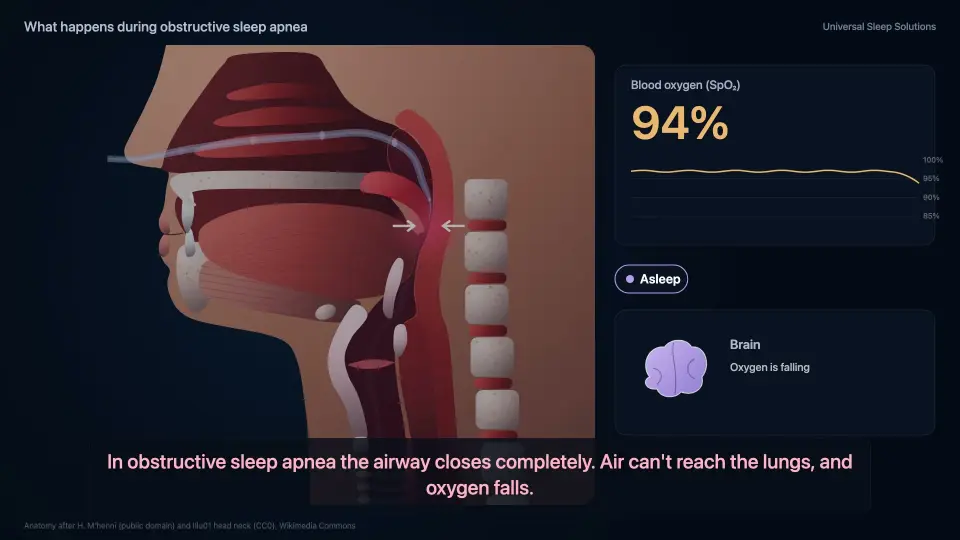
Sleep apnea makes your airway close again and again during sleep. Each time, your brain wakes you just enough to open the airway. These tiny wake-ups are so short that most people do not remember them. But they keep you from reaching the deep, restful stages of sleep your body needs.
The result? You may spend 7 to 8 hours in bed. But you only get a small part of the good sleep your body needs. It is like filling a glass that has a hole in the bottom. The amount looks right, but the quality is missing.
What other signs come with the tiredness?
Daytime tiredness from sleep apnea often comes with other signs:
- Brain fog — Trouble thinking clearly, making choices or staying focused.
- Memory problems — Forgetting names, appointments or recent talks.
- Mood changes — Feeling cranky, anxious or depressed.
- Less drive — Losing interest in hobbies or activities.
- Morning headaches — Dull headaches that fade as the day goes on.
- Microsleeps — Falling asleep for a few seconds without meaning to while you are awake.
Why is drowsy driving so dangerous?
Drowsy driving is one of the most dangerous results of this tiredness. Studies show that people with untreated sleep apnea are 2 to 3 times more likely to be in a car crash. Driving drowsy can be just as dangerous as driving drunk.
How do you get tested?
Do you feel tired all the time even though you get enough hours of sleep? A sleep study can show if sleep apnea is the cause. The study measures your breathing, oxygen levels and stages of sleep all night.
Myth: Everyone feels tired during the day. It is just part of being busy. Fact: Feeling tired all day is not normal if you get enough hours of sleep. It is one of the most common signs of sleep apnea. You should get it checked.
How does treatment bring back your energy?
A CPAP machine blows air through a mask to keep your airway open during sleep. This stops the repeated wake-ups and oxygen drops. Many patients say their first good night on CPAP changed everything. They woke up refreshed for the first time in years.
- CPAP or BiPAP therapy — The best treatment for getting back good sleep.
- Oral appliances (mouth guards) — For mild to moderate cases.
- Inspire therapy — A device placed in the body for people who cannot use CPAP.
- Lifestyle changes — Losing weight, exercise and better sleep habits.
SLEEP APNEA · DAYTIME TIREDNESS
Why you wake up tired
Airway closes
Your airway closes again and again during sleep.
Brain wakes you
Your brain wakes you just enough to reopen it.
Deep sleep lost
Tiny wake-ups keep you out of deep, restful sleep.
Key pointTired all day
You feel drained, foggy and moody the next day.
SLEEP APNEA · DAYTIME TIREDNESS
Signs beyond tiredness
| What you may notice | |
|---|---|
| Brain fog | Trouble thinking clearly or staying focused |
| Memory problems | Forgetting names, appointments or recent talks |
| Mood changes | Feeling cranky, anxious or depressed |
| Morning headaches | Dull headaches that fade as the day goes on |
| Microsleeps | Falling asleep for a few seconds without meaning to |
| Drowsy drivingDeciding factor | 2 to 3 times more likely to crash if untreated |
Why Sleep Apnea Makes You Tired
- 01
You Fall Asleep
You go to bed and think you're sleeping well, but your airway is closing repeatedly.
- 02
Brain Wakes Up
Each time your airway closes, your brain briefly wakes to reopen it — you don't remember these arousals.
- 03
No Deep Sleep
Constant disruptions prevent you from reaching deep, restorative sleep stages.
- 04
Wake Up Exhausted
Despite 7-8 hours in bed, you feel like you barely slept. Fatigue persists all day.
- 05
CPAP Fixes the Cycle
By keeping your airway open, CPAP allows uninterrupted deep sleep — and you wake up refreshed.
When patients tell me they 'just need more coffee,' I always ask about sleep quality. True exhaustion despite adequate sleep time is one of the most important signs of sleep apnea.
Minal Patel, M.D.
Watch and learn
Common questions
Why am I so tired even though I sleep 8 hours?
Can sleep apnea cause brain fog?
How quickly does CPAP improve energy?
Is daytime sleepiness dangerous?
Trusted medical sources
This page follows guidance and research from leading medical organizations.
Further reading
- AASMObstructive Sleep Apnea
- NHLBISleep Apnea Information
- Mayo ClinicOSA Overview
- NIHSleep Apnea
- AASMObstructive Sleep Apnea
- NHLBISleep Apnea Treatment
Part of our narcolepsy and hypersomnia service.