
Article · 2 min read
Alcohol and Sleep Apnea
Alcohol makes sleep apnea worse. It relaxes the muscles in your airway. Learn how drinking affects your sleep and what you can do.
General information, not medical advice. Read our disclaimer.
SLEEP APNEA · ALCOHOL
Alcohol and sleep apnea at a glance
- 3–4hoursNo alcohol before bedtime
- Do not drink alcohol within 3 to 4 hours of bedtime.
- If you drink, keep it moderate.
- Always use your CPAP, most of all after drinking.
- Talk with your sleep doctor about how much you drink.
See a sleep doctor if…
- You drink and want to know how it affects your sleep apnea
- You snore more on nights you drink
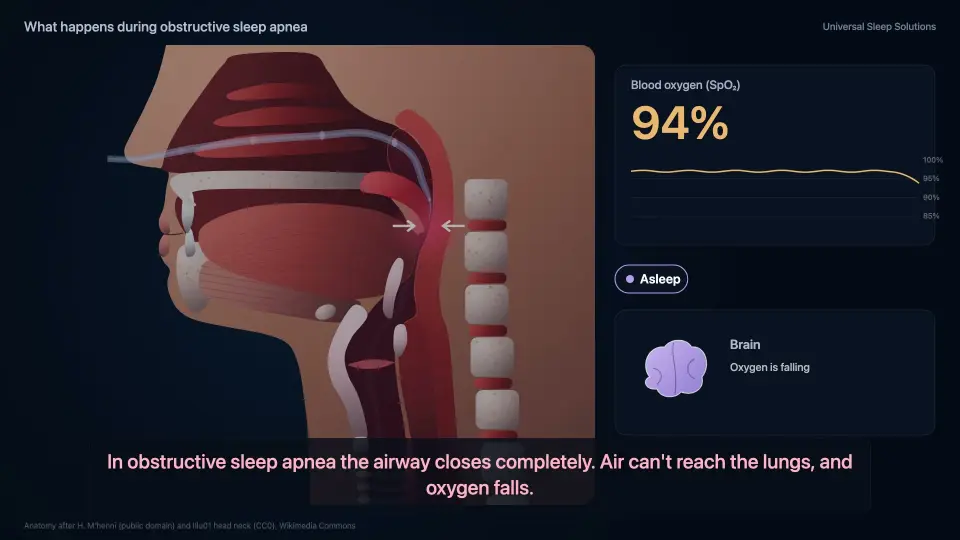
Yes. Alcohol makes sleep apnea worse. It relaxes the muscles in your airway, so your breathing stops more often and for longer.
How does alcohol affect sleep apnea?
Alcohol and sleep apnea are a dangerous mix. Even a moderate amount of alcohol can make breathing problems in sleep much worse.
Why does alcohol make it worse?
- Relaxed muscles — Alcohol relaxes the muscles of your upper airway more than normal sleep does.
- Slower wake-up response — Your brain is slower to notice and respond when your breathing stops.
- Longer breathing pauses — Pauses in breathing last longer after drinking.
- Lower oxygen levels — Oxygen drops get worse.
- More snoring — You snore more after drinking.
What can you do?
- Stop early — Do not drink alcohol within 3 to 4 hours of bedtime.
- Drink less — If you drink, keep it moderate.
- Use your CPAP — Always use your CPAP machine, most of all after drinking. It matters even more on nights you drink.
- Be open with your doctor — Talk with your sleep doctor about how much you drink.
SLEEP APNEA · ALCOHOL
How alcohol makes sleep apnea worse
Muscles relax
Alcohol relaxes the muscles of your upper airway.
Airway closes more
Your airway closes more often during sleep.
Slower wake-up
Your brain is slower to notice breathing has stopped.
Key pointLonger pauses
Breathing pauses last longer after drinking.
Lower oxygen
Oxygen drops get worse, and you snore more.
Watch and learn
Common questions
Does alcohol make sleep apnea worse?
Trusted medical sources
This page follows guidance and research from leading medical organizations.
Further reading
- AASMObstructive Sleep Apnea
- NHLBISleep Apnea Information
- Mayo ClinicOSA Overview
- NIHSleep Apnea
- AASMObstructive Sleep Apnea
- NHLBISleep Apnea Treatment