
Article · 2 min read
Sleep Apnea and Diabetes
Sleep apnea and type 2 diabetes often happen together. Learn how they are linked and how treatment helps both.
General information, not medical advice. Read our disclaimer.
SLEEP APNEA · DIABETES
Sleep apnea and diabetes at a glance
- Sleep apnea and type 2 diabetes often happen together.
- Sleep apnea makes blood sugar harder to control.
- Diabetes raises the risk of breathing problems during sleep.
- Nightly CPAP can help your body respond better to insulin.
- People with diabetes should be checked for sleep apnea.
Sleep apnea and type 2 diabetes often happen together, and they affect each other. Treating sleep apnea can improve blood sugar control. That is why people with diabetes should be checked for sleep apnea.
How are sleep apnea and diabetes linked?
Sleep apnea and type 2 diabetes affect each other in both directions. Sleep apnea makes blood sugar harder to control. Diabetes raises the risk of breathing problems during sleep.
How does sleep apnea affect blood sugar?
- Low oxygen — Oxygen levels drop again and again. This raises insulin resistance. That means your body responds less well to insulin, the hormone that lowers blood sugar.
- Broken sleep — Broken sleep upsets how your body uses sugar.
- Stress hormones — Bursts of stress hormones raise blood sugar.
- Inflammation — Long-term inflammation (irritation inside the body) affects how your body uses energy.
How does treatment help?
CPAP is a machine that blows air through a mask to keep your airway open. Studies show that using CPAP every night can help your body respond better to insulin. It can also help with blood sugar control. This is especially true for people whose diabetes is poorly controlled.
Should people with diabetes be checked for sleep apnea?
Yes. Because the two conditions often happen together, people with diabetes should be checked for sleep apnea.
SLEEP APNEA · DIABETES
How sleep apnea raises blood sugar
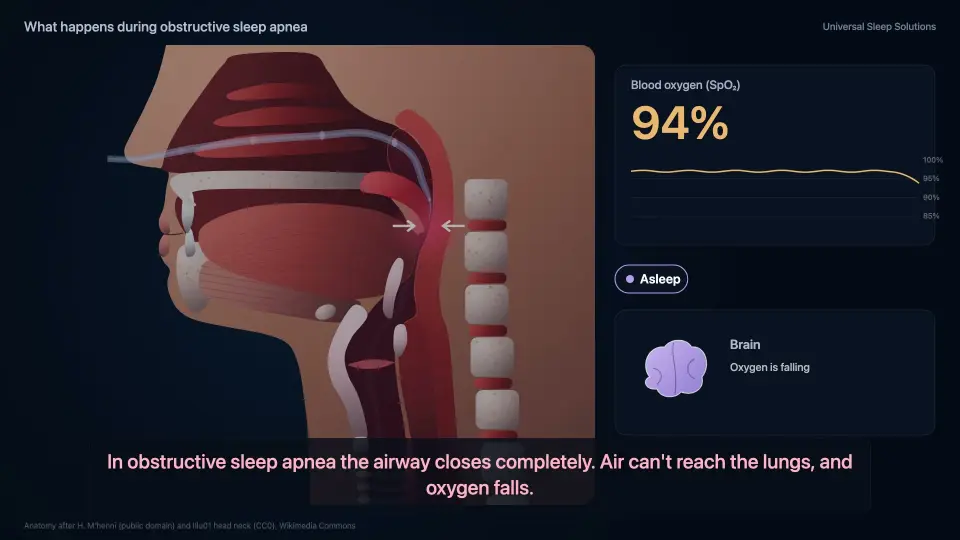
Oxygen drops
Oxygen levels drop again and again during sleep.
Insulin resistance
Your body responds less well to insulin, which lowers sugar.
Key pointStress hormones
Bursts of stress hormones raise blood sugar.
Broken sleep
Broken sleep upsets how your body uses sugar.
Watch and learn
Common questions
Does sleep apnea cause diabetes?
Trusted medical sources
This page follows guidance and research from leading medical organizations.
Further reading
- AASMObstructive Sleep Apnea
- NHLBISleep Apnea Information
- Mayo ClinicOSA Overview
- NIHSleep Apnea
- AASMObstructive Sleep Apnea
- NHLBISleep Apnea Treatment