
Guide · 2 min read
Snoring Treatment – Expert Solutions to Stop Snoring
Snoring may be more than a nuisance — it could be a sign of sleep apnea. Get a proper evaluation and effective treatment.
General information, not medical advice. Read our disclaimer.
SNORING · TREATMENT
Snoring at a glance
- Snoring affects nearly half of all adults.
- Loud, chronic snoring is the most common sign of sleep apnea.
- Not all snoring is sleep apnea.
- A sleep study is the only way to tell the difference.
- The best treatment depends on the cause.
See a sleep doctor if…
- Your partner reports loud, disruptive snoring
- You gasp or choke during sleep
- You are very sleepy during the day
- You wake with morning headaches or a dry mouth
- Snoring is hurting your relationship or quality of life
Snoring affects nearly half of all adults. It can be a sign of obstructive sleep apnea, a serious medical condition. A proper checkup by a sleep specialist is the first step to treatment that works.
When is snoring a problem?
- Loud snoring — Your partner says your snoring is loud and disruptive.
- Gasping or choking — You gasp or choke during sleep.
- Daytime sleepiness — You feel very sleepy during the day.
- Morning signs — You wake with morning headaches or a dry mouth.
- Strain at home — Snoring is hurting your relationship or quality of life.
How is snoring different from sleep apnea?
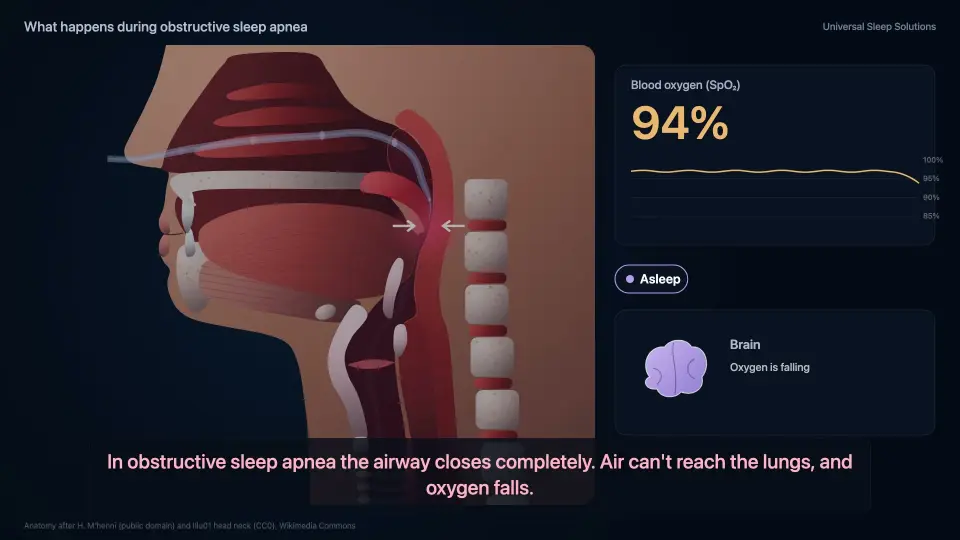
Simple snoring (primary snoring) doesn't involve breathing pauses. Sleep apnea means the airway collapses again and again, and oxygen levels drop. A sleep study is the only way to tell the difference.
What treatments can help?
- CPAP therapy — If sleep apnea is present.
- Oral appliances — Custom dental devices that move the jaw into a new position.
- Weight loss — It eases tissue pressure on the airway.
- Positional therapy — Training to sleep on your side.
- Nasal treatments — For snoring caused by a blocked nose.
- Surgery — Procedures on the palate (roof of the mouth), tonsil removal (tonsillectomy), or other operations.
Call (512) 931-1575 to schedule your snoring evaluation.
SNORING · OR SLEEP APNEA?
Simple snoring vs sleep apnea
| Simple snoring | Sleep apnea | |
|---|---|---|
| Breathing pausesDeciding factor | No | Yes |
| What happens | Snoring without breathing pauses | Airway collapses again and again |
| Oxygen drops | Not described | Yes |
| How to tell | Sleep study | Sleep study |
Watch and learn
Common questions
Is snoring always a sign of sleep apnea?
What are the best snoring treatments?
Trusted medical sources
This page follows guidance and research from leading medical organizations.
Further reading
- AASMObstructive Sleep Apnea
- NHLBISleep Apnea Information
- Mayo ClinicOSA Overview
- NIHSleep Apnea
- AASMObstructive Sleep Apnea
- NHLBISleep Apnea Treatment
Part of our sleep apnea management service.