
Guide · 2 min read
Sleep Apnea Doctor – Expert Diagnosis & Treatment
Dr. Minal Patel finds and treats obstructive sleep apnea in patients of all ages.
General information, not medical advice. Read our disclaimer.
SLEEP APNEA · BASICS
Sleep apnea at a glance
- 1 to 5%Of children have sleep apnea
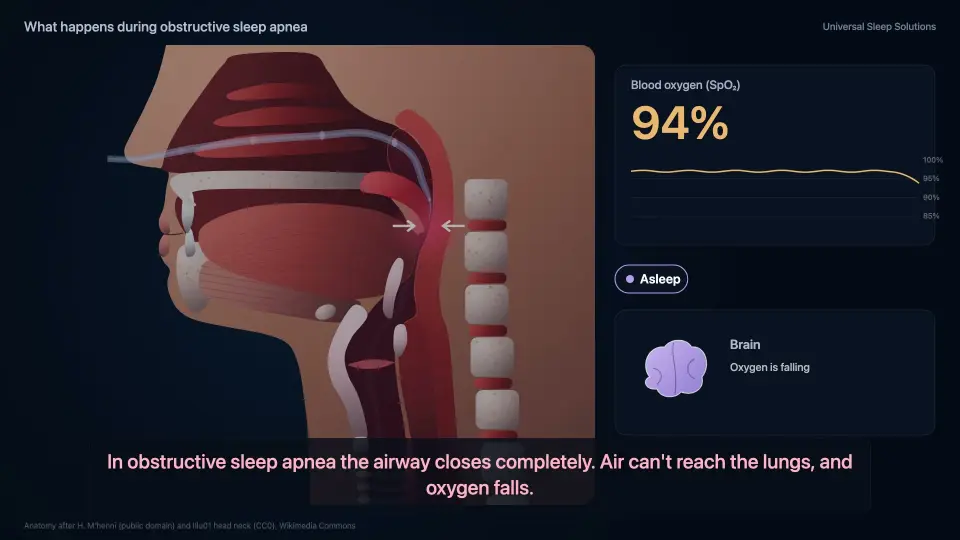
- In sleep apnea, your airway closes again and again during sleep.
- It is found with a sleep study in a lab or at home.
- Treatment fits how severe it is and what you prefer.
- Untreated, it raises the risk of heart disease, stroke and diabetes.
- Children can have it too, often from large tonsils or adenoids.
See a sleep doctor if you have…
- Loud snoring that goes on for a long time
- Pauses in breathing that others see while you sleep
- Gasping or choking as you wake up
- Strong daytime sleepiness or morning headaches
- Trouble focusing, crankiness or mood changes
Obstructive sleep apnea (OSA) is a serious condition. During sleep, your airway closes again and again, which causes pauses in your breathing. A sleep apnea doctor is an expert in finding this problem and planning treatment that works.
What are the signs of sleep apnea?
- Loud snoring — snoring that goes on for a long time
- Pauses in breathing — that others see while you sleep
- Gasping or choking — as you wake up
- Daytime sleepiness — feeling very sleepy during the day
- Morning headaches — waking up with a headache
- Trouble focusing — a hard time paying attention
- Mood changes — crankiness and mood changes
How do we diagnose sleep apnea?
Dr. Patel uses a full approach. She talks with you and examines you. She also uses tests that measure your sleep:
- In-lab polysomnography — an overnight sleep study in a lab. It is the gold standard (best) test.
- Home sleep apnea testing — an easy test you do at home
How is sleep apnea treated?
Treatment is chosen to fit how severe your sleep apnea is and what you prefer:
- CPAP therapy — a machine that blows air through a mask to keep your airway open. It is the first treatment for moderate to severe OSA.
- Oral appliance therapy — a device you wear in your mouth. It can be used instead of CPAP for mild to moderate cases.
- Weight management — lifestyle changes that can make it less severe
- Positional therapy — for people whose apnea depends on their sleep position
- Surgery — when simpler treatments don't work
What happens if sleep apnea is not treated?
Sleep apnea that is not treated is linked to serious health problems:
- Heart disease and stroke — strain on the heart and blood vessels
- High blood pressure — blood pressure that stays too high
- Type 2 diabetes — a higher risk of diabetes
- Depression and anxiety — effects on mood
- Car crashes — from feeling sleepy in the day
Don't let sleep apnea go untreated. Call (512) 931-1575 to book your visit with Dr. Patel.
Watch and learn
Common questions
How is sleep apnea diagnosed?
What happens if sleep apnea goes untreated?
Can children have sleep apnea?
Trusted medical sources
This page follows guidance and research from leading medical organizations.
Further reading
- AASMObstructive Sleep Apnea
- NHLBISleep Apnea Information
- Mayo ClinicOSA Overview
- NIHSleep Apnea
- AASMObstructive Sleep Apnea
- NHLBISleep Apnea Treatment
Part of our sleep apnea management service.