
Guide · 2 min read
Sleep Apnea & Heart Disease – Understanding the Connection
Untreated sleep apnea greatly raises your risk of heart and blood vessel disease. Treatment can protect your heart.
General information, not medical advice. Read our disclaimer.
HEART · SLEEP APNEA
Sleep apnea and your heart at a glance
- 2–4×Higher irregular heartbeat risk
- 2–3×Higher stroke risk
- 2–10mmHgBlood pressure drop with CPAP
- Untreated sleep apnea raises heart risk on its own.
- It is the leading cause of hard-to-treat high blood pressure.
- Nightly CPAP lowers blood pressure and irregular heartbeat risk.
Ask your doctor about sleep apnea testing if…
- You have heart disease or risk factors for it
- Your blood pressure stays high even with medicines
- You have atrial fibrillation (an irregular heartbeat)
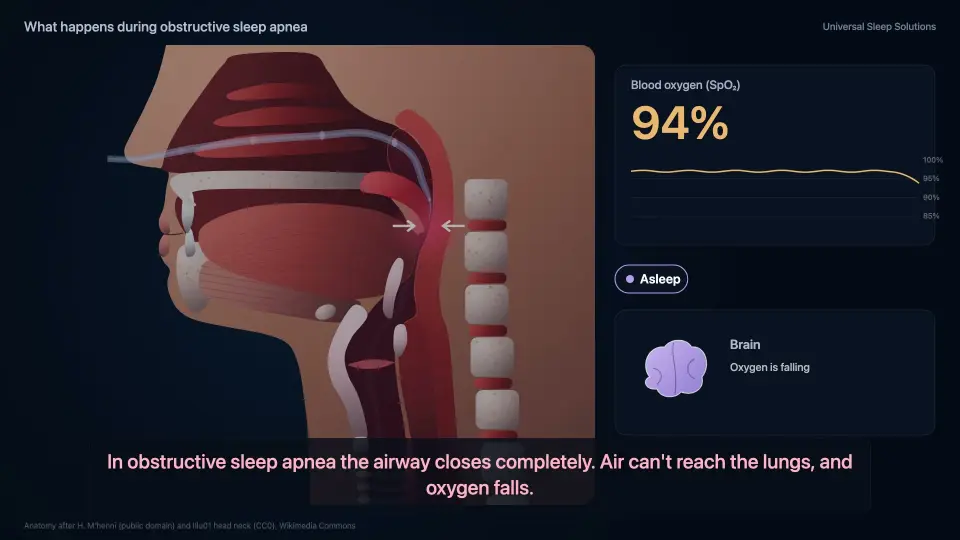
Sleep apnea and heart disease are closely linked. In obstructive sleep apnea, your airway gets blocked again and again while you sleep. When it is not treated, it is an independent risk factor for many heart and blood vessel problems. This means it raises your risk on its own, even apart from your other risks.
How does sleep apnea affect the heart?
Each time your breathing stops (an apnea), it sets off a chain of harmful changes in your body:
- Low oxygen — Your blood oxygen drops again and again.
- Stress surges — Your heart rate and blood pressure spike.
- Inflammation — Your whole body has mild swelling and irritation that does not go away.
- Oxidative stress — Harmful chemicals damage your blood vessels.
- Pressure changes in the chest — These put physical strain on your heart.
Which heart problems are linked to sleep apnea?
- High blood pressure — Obstructive sleep apnea is the leading cause of resistant hypertension. That is high blood pressure that stays high even with medicines.
- Atrial fibrillation — An irregular heartbeat. The risk is 2-4 times higher.
- Heart failure — When the heart cannot pump as well as the body needs.
- Coronary artery disease — Narrowed heart arteries.
- Stroke — The risk is 2-3 times higher.
- Sudden cardiac death — The heart suddenly stops. The risk is higher during sleep hours.
How does treatment help?
Studies show that CPAP therapy can:
- Lower blood pressure — By 2-10 mmHg (the unit used for blood pressure).
- Prevent atrial fibrillation coming back — It lowers the chance that it returns.
- Help heart failure — It improves results for people with heart failure.
- Lower overall risk — It lowers your overall risk of heart and blood vessel disease.
If you have heart disease or risk factors for it, ask your doctor about testing for sleep apnea. Call (512) 931-1575 to set up a visit.
HEART · SLEEP APNEA
How each breathing pause strains your heart
Breathing stops
Your airway gets blocked while you sleep.
Low oxygen
Your blood oxygen drops again and again.
Stress surges
Your heart rate and blood pressure spike.
Inflammation
Ongoing irritation and harmful chemicals damage blood vessels.
Heart strain
Pressure changes in the chest strain your heart.
Key point
HEART · SLEEP APNEA
Heart problems linked to sleep apnea
| Link to sleep apnea | |
|---|---|
| High blood pressure | Leading cause of the hard-to-treat kind |
| Atrial fibrillation | Risk is 2 to 4 times higher |
| Stroke | Risk is 2 to 3 times higher |
| Heart attack | Risk is 2 to 3 times higher if untreated |
| Sudden cardiac death | Higher risk during sleep hours |
Watch and learn
Common questions
Can sleep apnea cause a heart attack?
Does treating sleep apnea lower heart disease risk?
Trusted medical sources
This page follows guidance and research from leading medical organizations.
Further reading
- AASMObstructive Sleep Apnea
- NHLBISleep Apnea Information
- Mayo ClinicOSA Overview
- NIHSleep Apnea
- AASMObstructive Sleep Apnea
- NHLBISleep Apnea Treatment
Part of our sleep apnea management service.