
Article · 2 min read
How to Get Used to CPAP Therapy
Adjusting to CPAP takes patience, but these proven tips from a sleep specialist will help you succeed.
General information, not medical advice. Read our disclaimer.
CPAP · GETTING STARTED
Getting used to CPAP at a glance
- 1–4weeksUsual time to adjust
- Feeling overwhelmed at first is normal.
- Practicing with the mask while awake speeds up adjustment.
- The right mask and humidifier make a huge difference.
- Even one night off brings your sleep apnea back.
- Your sleep team can adjust pressure and try other masks.
Most people get used to CPAP within 1-4 weeks. Practicing with the mask during the day speeds things up. The right mask, the right humidifier settings and using it every night make the biggest difference.
Is it normal for CPAP to feel hard at first?
Yes. Starting CPAP therapy can feel challenging. Wearing a mask to bed, hearing the airflow and getting used to the pressure are all new.
Many patients feel overwhelmed at first. But I want you to know that this is completely normal. Most people who stick with it find that CPAP greatly improves their sleep and quality of life.
What helps in the first week?
- Wear the mask while awake — Watch TV or read while wearing your mask (without the machine on) to get used to the feeling. This daytime practice speeds up getting used to it.
- Use the ramp feature — Start at low pressure and let the machine slowly rise to the level your doctor set
- Keep the humidifier full — Dry air makes CPAP much less comfortable
- Find the right mask — If your mask is uncomfortable, try a different style. There are nasal, nasal pillow and full-face options.
- Use chin straps if needed — If you breathe through your mouth, a chin strap or full-face mask can help
How do you make CPAP a habit?
Using CPAP every night is the most important factor for success. These steps help:
- Mask on last — Put your mask on as the last thing before turning off the lights
- Easy to reach — Keep your CPAP machine in a handy spot on your nightstand
- Same routine — Set a steady bedtime routine that includes CPAP
- Track your progress — Many machines have apps that show your usage and AHI (how many times an hour your breathing stops or gets shallow)
- Celebrate milestones — Each night of use is a win
What if you run into problems?
- Mask discomfort — Try different mask types. Adjust straps so the fit is snug but not tight.
- Stuffy nose — Use the heated humidifier. Try a saline (salt water) nasal spray before bed.
- Claustrophobia (feeling closed in) — Try a nasal pillow mask, which covers very little of your face. Practice with the mask during the day.
- Aerophagia (swallowing air) — Try a lower pressure or changing your sleep position. Talk with your doctor.
- Mask leak — Make sure the mask fits well. Replace worn cushions, or try a different mask size.
When should you call your sleep team?
Your sleep team is there to help you while you adjust. Reach out to your sleep specialist or equipment provider if problems keep coming back. They can adjust your pressure settings or try different masks. They can also suggest other comfort features.
CPAP · TROUBLESHOOTING
Common problems and fixes
| What to try | |
|---|---|
| Mask discomfort | Try other mask types; straps snug but not tight |
| Stuffy nose | Use the heated humidifier; saline spray before bed |
| Feeling closed in | Try a nasal pillow mask; practice during the day |
| Swallowing air | Ask your doctor about lower pressure or changing position |
| Mask leak | Check the fit, replace worn cushions, try another size |
| Pulling the mask off | Use ramp, practice while awake, check the fit |
CPAP · GETTING STARTED
Your first weeks with CPAP
- 1
Practice while awake
Wear the mask, machine off, while you watch TV or read.
- 2
Use the ramp feature
Start at low pressure and let it rise to your level.
- 3
Keep humidifier full
Dry air makes CPAP much less comfortable.
- 4
Make it routine
Put your mask on last, right before turning off the lights.
- 5
Use it every night
Consistent nightly use is the most important factor for success.
Key point - 6
Call your sleep team
They can change pressure, masks or comfort features.
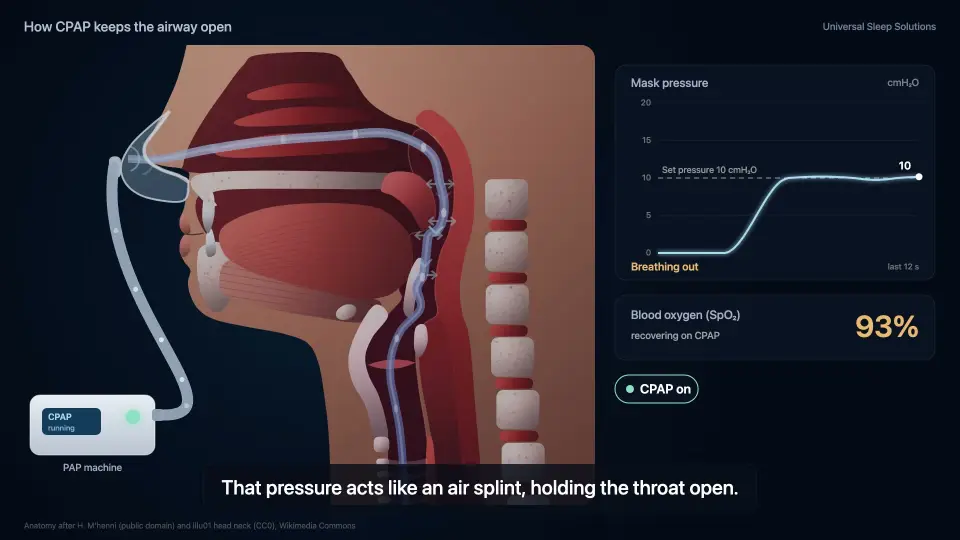
Watch and learn
Common questions
How long does it take to adjust to CPAP?
What if I keep pulling my mask off at night?
Can I take breaks from CPAP?
Trusted medical sources
This page follows guidance and research from leading medical organizations.
Further reading
- AASMCPAP Therapy
- Sleep FoundationCPAP Machines
- NHLBIPAP Therapy Overview
- AASMObstructive Sleep Apnea
- NHLBISleep Apnea Information
- Mayo ClinicOSA Overview