
Article · 2 min read
Inspire vs. CPAP: Comparing Sleep Apnea Treatments
Both treatments work well for sleep apnea. Here's how they compare so you can choose with your doctor.
General information, not medical advice. Read our disclaimer.
TREATMENT · INSPIRE VS CPAP
Inspire vs CPAP at a glance
- 15–65AHI range for Inspire
- 35 or lessBMI needed for Inspire
- About 11yearsUntil Inspire battery change
- Both lower AHI (breathing pauses per hour) and improve symptoms.
- CPAP is the first treatment most people try.
- Inspire is for people who cannot tolerate CPAP.
- Inspire needs no mask but does need surgery.
- The best treatment is the one you will use consistently.
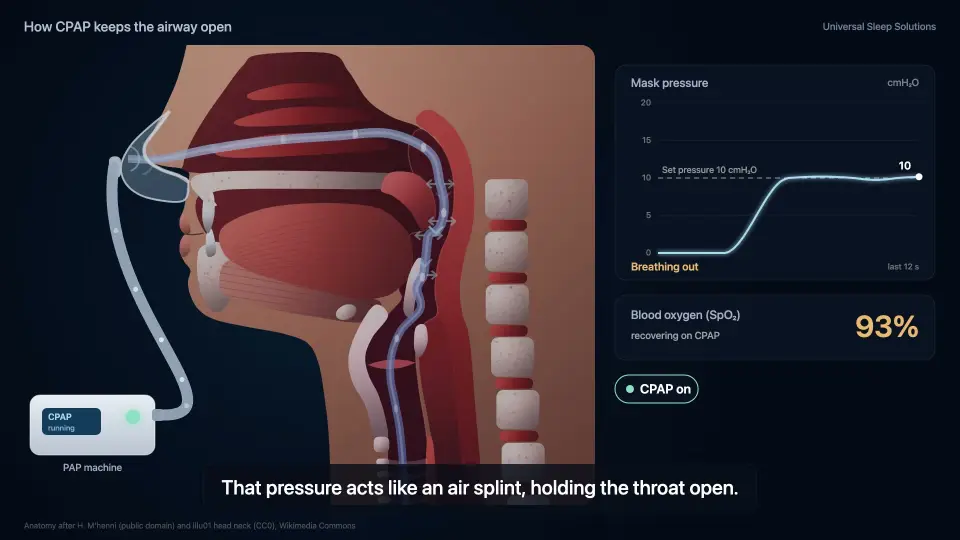
CPAP and Inspire both treat obstructive sleep apnea (OSA) well, but they work in very different ways. CPAP uses air pressure from outside your body to hold your airway open. Inspire uses a nerve stimulator inside your body to keep your airway muscles active while you sleep. Most people start with CPAP, and Inspire is an option when CPAP doesn't work for them.
What are the pros of CPAP?
- Most studied — It is the most studied and proven sleep apnea treatment.
- No surgery — Nothing goes inside your body.
- Works for all levels — It works for mild, moderate and severe OSA.
- Fast results — It works right away when you use it properly.
- Lower cost up front — It costs less at the start.
What are the cons of CPAP?
- Nightly mask — You need to wear a mask every night.
- Comfort — Some people find it uncomfortable.
- Sticking with it — Using it every night is a common challenge.
- Side effects — Noise, dry mouth, and feeling closed in (claustrophobia) can be problems.
What are the pros of Inspire?
- No mask — There is no mask, hose, or machine.
- Natural breathing — It works with your body's natural breathing.
- Well liked — Patients are highly satisfied and use it often.
- Simple to use — You click a remote before bed.
What are the cons of Inspire?
- Surgery — It needs a surgical procedure.
- Strict rules on who qualifies — (AHI 15-65, BMI ≤ 35). AHI is how many times an hour your breathing stops or gets shallow. BMI is a measure of weight for height.
- Airway type — It does not suit every way an airway can collapse.
- Battery — The battery needs to be replaced after about 11 years.
- Higher cost at the start — It costs more at first. Insurance often covers it; check with our office.
Which is right for you?
Make this choice with your sleep specialist. It depends on your diagnosis, how CPAP has gone for you, the shape of your airway, and what you prefer.
CPAP is the first treatment most people try. Inspire is for people who can't use CPAP comfortably. Studies show both cut the number of breathing pauses and ease symptoms. Inspire offers a mask-free option, but it needs surgery and you must meet certain rules.
TREATMENT · CHOOSING
Which treatment first?
You have obstructive sleep apnea
Most people start with CPAP
Question: Is CPAP tolerable for you?
If noAsk your sleep doctor about Inspire
Use CPAP consistently
TREATMENT · HEAD TO HEAD
CPAP vs Inspire side by side
| CPAP | Inspire | |
|---|---|---|
| How it works | Air pressure holds your airway open | Nerve signals keep airway muscles active |
| Surgery | None | Yes, a surgical procedure |
| What you use nightly | A mask, hose and machine | Click a remote before bed |
| Who it fitsDeciding factor | All levels of sleep apnea | AHI 15–65, BMI 35 or less, right airway type |
| Common challenges | Mask comfort, noise, dry mouth, feeling closed in | Not for all types of airway collapse |
| Upkeep and cost | Lower upfront cost | Higher upfront cost; battery change after about 11 years |
Watch and learn
Common questions
Is Inspire more effective than CPAP?
Can I try CPAP before considering Inspire?
Trusted medical sources
This page follows guidance and research from leading medical organizations.
Further reading
- AASMCPAP Therapy
- Sleep FoundationCPAP Machines
- NHLBIPAP Therapy Overview
- AASMObstructive Sleep Apnea
- NHLBISleep Apnea Information
- Mayo ClinicOSA Overview